Most of our customers come to us for one of two things: hosting, or a website build. A meaningful chunk of them need both. This post is about how those two services fit together, when bundling them actually saves money, and when it's better to keep them separate.
If you're reading this, you probably want one vendor for the whole thing. That's a reasonable instinct. The question is whether the vendor you're talking to is set up to do both well.
Why most hosts won't touch your build
If you've ever asked a hosting-only company to help redesign your site, you've probably heard some version of: "That's not really what we do." The reason isn't laziness. It's that most hosts have learned the hard way that taking over a build creates long-term problems they don't want.
The pattern looks like this: a customer asks their host to "just install this WordPress theme and configure it." The host does. Three months later, the theme has a security update. The customer calls support asking why their site is broken. The host explains the update wasn't applied. The customer explains they didn't know they needed to apply it. The conversation ends with the host doing free work to fix a problem they didn't cause.
Multiply this by every plugin, every theme setting, every third-party integration the customer has on their site. The host becomes the de facto maintainer of code they didn't write. Most hosts pull back from this. We don't — but we do it deliberately, and the way we do it is worth understanding.
Why most agencies won't host what they built
The other side of the same problem: agencies that build your site usually don't want to host it. The reason is different but symmetrical. They've built you a custom site. If it goes down at 2am on a Sunday, you'll call them. They don't have a 24/7 hosting team. They have a project manager and a developer who aren't on call.
What most agencies do: they recommend a host, hand off the site, and disappear. When something breaks, you call the host. The host looks at the code, sees it's a custom build they didn't make, and either bills you for the diagnostic or tells you to go back to the agency. The agency is long gone. You're stuck in the middle.
This is the problem a "one throat to choke" setup is supposed to solve. The question is whether the throat is actually capable of choking both problems.
When bundling makes sense
Bundling build + hosting works when three conditions are met:
1. The vendor builds on a stack they host
If we build your site on WordPress, we know exactly how it's supposed to behave on our servers — because we tune our servers for WordPress. We know the PHP version, the MySQL version, the plugin compatibility. If something breaks, we don't have to argue with another company about whose problem it is.
The opposite scenario: an agency builds you a custom React app and recommends a generic host. The host has no idea how the app works. The agency has no idea how the server is configured. You're the only one who sees both sides.
2. The vendor keeps the build team and the hosting team in the same conversation
When the same company builds and hosts, the people who build the site and the people who run the servers talk every day. At a shop our size, they're often the same person. When a new feature ships, whoever runs the servers knows. When a server gets patched, someone checks that the site still works. This is invisible to the customer, but it's the difference between "the vendor fixed it" and "we're still trying to figure out whose problem this is."
3. The vendor has a clear maintenance plan
Build + host only saves you stress if someone is actively maintaining the site after launch. If we hand off a beautiful new site and never touch it again, you've just traded one set of problems for another. Our standard process includes the first 30 days of post-launch fixes included, then a maintenance plan option after that.
When bundling doesn't make sense
Bundling breaks down when:
- You already have a designer or agency you trust. If you have a relationship with someone who knows your brand, switching them out for our build team is a downgrade. We're happy to host the result.
- You have a specialized need. A custom e-commerce platform, a proprietary SaaS frontend, an iOS app that needs a backend API — these aren't typical WordPress jobs. We can host them, but we shouldn't build them.
- You need a build faster than we can deliver. A full build usually takes us one to two weeks once we have your words and photos. If you need something live this week, a same-day one-page site can carry you until the full site is ready.
- You only need one of the two. If you just need hosting and you've already got a site you love, we don't try to upsell you a rebuild. Hosting only is a perfectly fine engagement.
How we price it
Hosting is a simple monthly plan. Builds are quoted separately based on scope: the number of pages, whether we're starting from a template or a blank canvas, and whether there's a content migration from an existing site.
What a typical engagement looks like
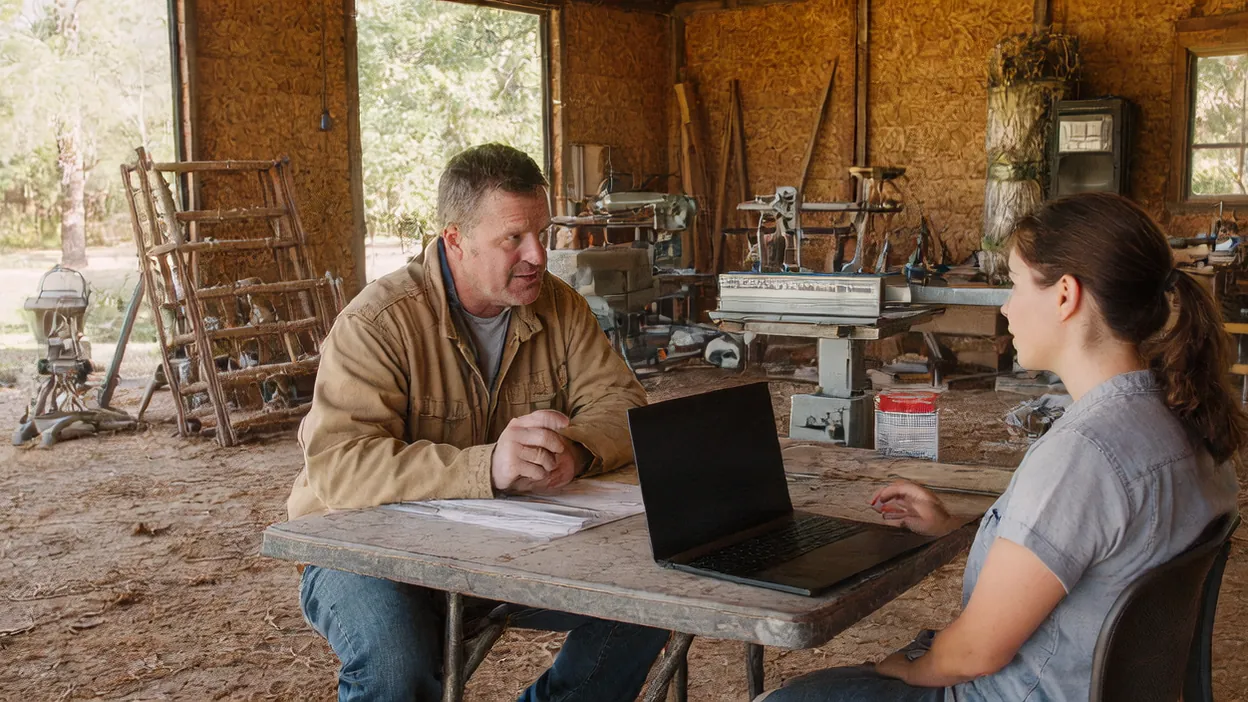
A concrete example. A local contractor comes to us. They have an existing website that was built five years ago and isn't mobile-friendly. It loads slowly. They want it rebuilt.
- Discovery call. We walk through their existing site, what they like, what they don't, and what their goals are. About 30 minutes.
- Proposal. We send a fixed-price quote for the build and recommend a hosting plan. The customer sees both numbers separately and as a bundle.
- Build phase. Usually one to two weeks once we have the words and photos. We design in Figma, build on WordPress with an appropriate foundation, add the approved business content, and set up the contact form and required integrations.
- Review and revise. One to two rounds of revisions based on the customer's feedback.
- Launch. We migrate their existing content (text, images, contact form submissions) to the new site, point the domain, verify SSL, and go live.
- 30 days post-launch. Any small fixes — typos, layout nudges, broken links — are included at no charge.
- Ongoing hosting + optional maintenance. The site stays on our servers. We handle backups, security updates, uptime monitoring. If they want ongoing content updates and feature additions, that's the maintenance plan.
Waiting on content is the usual delay, so the whole engagement depends mostly on how fast the words and photos arrive. After that, the customer pays their hosting bill and optionally the maintenance plan. They call us when something needs attention, and we answer.
The honest tradeoffs
Bundling build + host is not always cheaper than hiring an agency and a separate host. Sometimes it's more expensive. What you pay for is:
- One vendor who owns the entire stack
- No finger-pointing when something breaks
- A relationship that lasts past the launch
- A maintenance path that doesn't require you to learn WordPress
You don't pay for that with a $5/month shared hosting account and a freelance designer you found on Fiverr. That's fine — that's the right answer for a hobby project. It's not the right answer for a business site that needs to stay online and represent your company.
How to decide
If you're early in the buying process, ask yourself two questions:
- Do I want one company responsible for the whole site, or do I want to be the project manager between two vendors? If the former, bundling is the right shape. If the latter, separate build + host will probably work fine.
- How long do I expect this site to last? If you're planning to redesign every two years, bundling matters less because the build is short-lived. If you're planning a five-year relationship with this site, the long-term cost of two-vendor coordination adds up.
If the answer to both is "one vendor, long-term," then bundling is the right move. If either answer is different, separate is probably fine.
Either way, we're happy to talk. See hosting or call (330) 305-2750 if you want to walk through your specific situation.
See Our Hosting
Free SSL, free migration, and the same price at renewal.